


Which permits do you need for your food truck in France?
Starting a food truck in France? Then there are several permits, certificates and approvals you need to arrange before you can sell your first dish. France has its own rules for the vehicle, food safety, trading in public and selling alcohol. In this blog, we walk through every permit you need in France before you can start selling your products from a food truck.
Vehicle approval and registration (VASP / RESP)
Before a food truck can legally drive and trade in France, the vehicle itself has to be approved for commercial use. A motorised truck needs the wording “VASP Magasin” on its registration document (carte grise), while a fitted-out trailer is usually approved as “RESP Magasin”. You obtain this through a réception à titre isolé (RTI) at the DREAL — or the DRIEAT in the Paris region: you submit a technical file, the vehicle is inspected, and once it is approved you register it through the ANTS. Without the correct wording in box J1 of the carte grise, the vehicle fails its technical inspection (contrôle technique) and you risk a fine during a roadside check, so always check this before buying a used food truck. Buying from a specialist that builds to the relevant standards keeps this step straightforward.

Good to know: France’s low-emission zones (ZFE) are tightening in 2026. In some city centres, access depends on your Crit’Air sticker, so check the emission class of the vehicle before you buy it. Local exemptions for mobile traders sometimes apply.
Gas and electrical conformity
A large part of the vehicle approval is the safety of your gas and electrical installations. The gas system has to meet NF EN 1949 and the electrical system NF C 15-100, and both must be checked and certified by an approved body such as Qualigaz or Veritas (around €300). This certificate confirms there is no risk of fire, explosion or gas leak, and you need it before the DREAL will approve your vehicle. Always have a qualified professional install and certify the gas and electricity — it also protects your insurance in the event of a claim.

Free expert advice
Not sure which setup fits your concept and the French rules? Our advisors are happy to help.
Food hygiene training (HACCP)
At least one person working in the food truck must have completed food hygiene training of at least 14 hours, commonly known as HACCP training. The course covers storage temperatures, cleaning, traceability and the HACCP method, and must be given by an organisation registered with the DRAAF. You can be exempted if you have at least three years’ experience managing a food business or a recognised catering diploma. The certificate does not expire, but keep it on board — it is the first document an inspector will ask to see.
Declaration to the DDPP
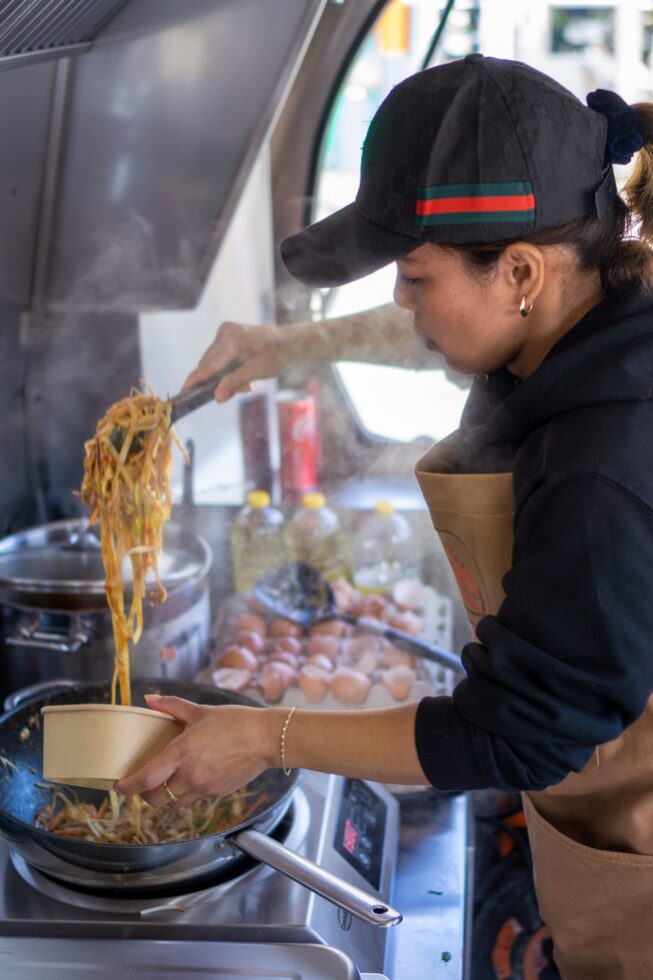
If you handle products of animal origin — meat, fish or dairy — you must declare your activity to the Direction départementale de la protection des populations (DDPP) before you open. The declaration is free but mandatory, and it allows the DDPP’s food-safety service to schedule inspections. During a visit you must be able to show your hygiene records, training certificates and supplier details, so keep your food safety plan (plan de maîtrise sanitaire) up to date and within reach.
Mobile trader card
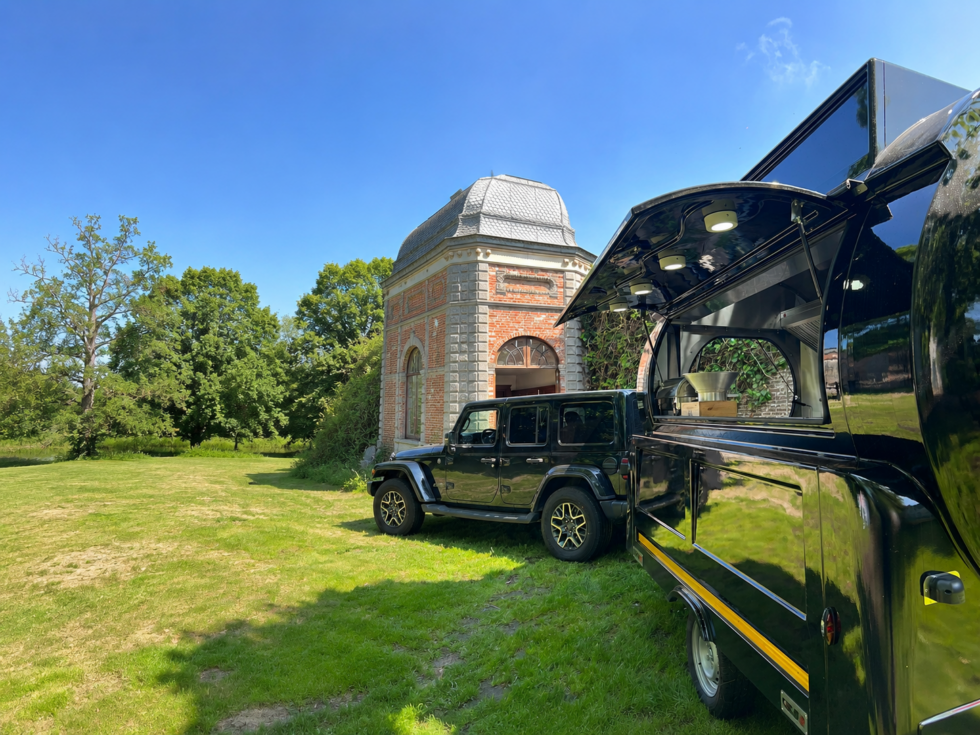
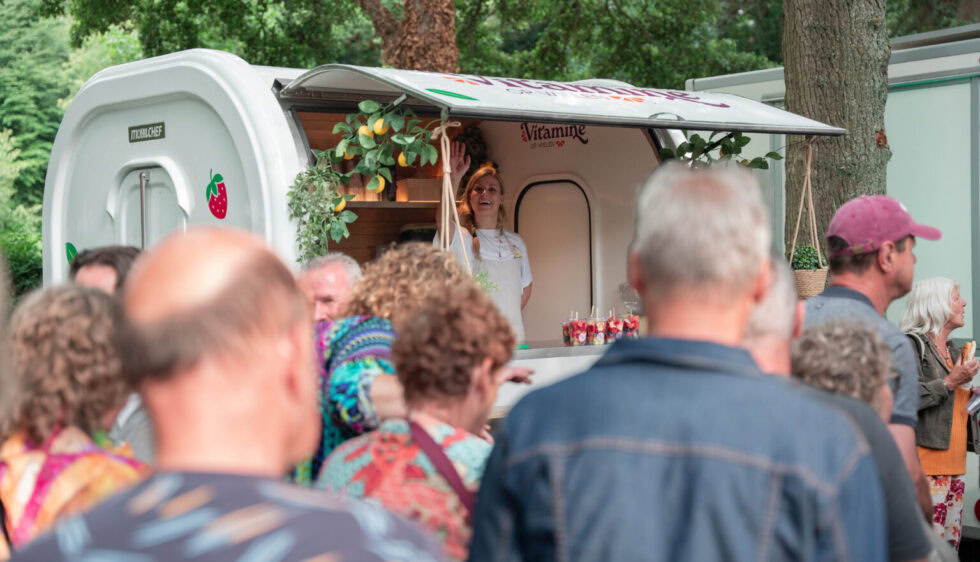
If you sell outside the commune where your business is registered — which most food trucks do — you need a carte de commerçant ambulant. You apply with form Cerfa 14022 at the CCI (if you are registered with the RCS) or the CMA (if you are registered with the RNE). It costs €30, is valid for four years, and is usually issued within two to four weeks. If you are in a hurry, a temporary certificate can be issued so you can start sooner.
Pitch and parking authorisation
A trader card does not give you a spot to stand. To trade on public ground you need an authorisation from the municipality — an autorisation d’occupation temporaire (AOT) or permis de stationnement — for which you pay a fee set by that municipality. This authorisation is temporary, personal and cannot be transferred or lent out. A spot on a market follows separate rules and is arranged with the mairie or the market manager, and for a festival or private event you arrange access with the organiser or landowner. There is no single national rule, so check with every municipality where you want to trade.
Alcohol licence
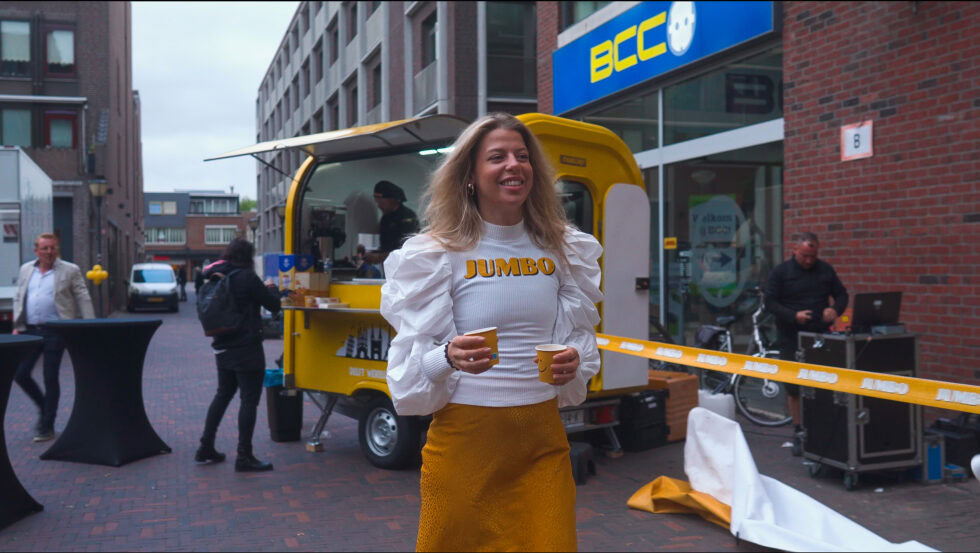
If you want to sell alcohol — even beer, wine or cider — you need a permis d’exploitation, obtained after a 20-hour training course and valid for ten years, together with the appropriate sales licence (a “petite licence à emporter” for group-3 drinks). Selling strong spirits from a mobile business is not allowed. For daytime sales between 8:00 and 22:00 you also file a prior declaration with the mairie at least 15 days before opening; for night sales you need the PVBAN. If you do not serve alcohol, you can skip this step.
Driving licence and weight
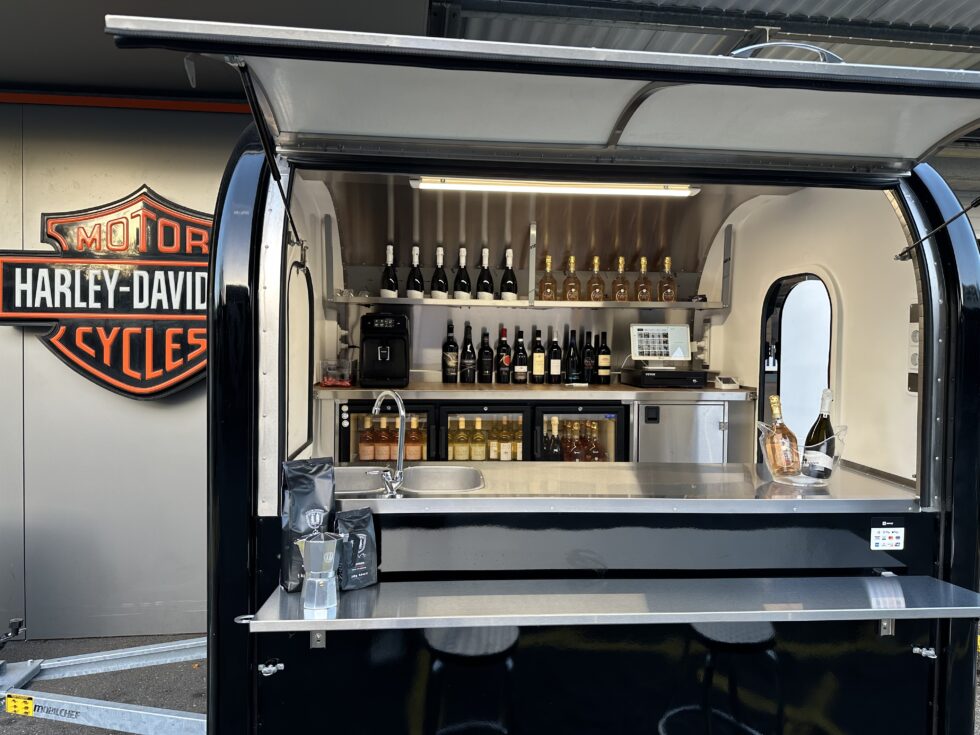
Finally, you need the driving licence that matches the weight of your vehicle. Check the PTAC (gross authorised weight) on the carte grise: a category B licence covers up to 3.5 tonnes, B96 or BE covers a vehicle-and-trailer combination between 3.5 and 4.25 tonnes (with a trailer over 750 kg), and above that you need C1 or C. For a trailer, add the weight of the towing vehicle and the trailer together. Many of our models are designed to stay under 3,500 kg, so a standard B licence is usually enough.

Ready to start your food truck?
Discover our models and let us help you choose the right one for your concept.
Discover our most popular concepts
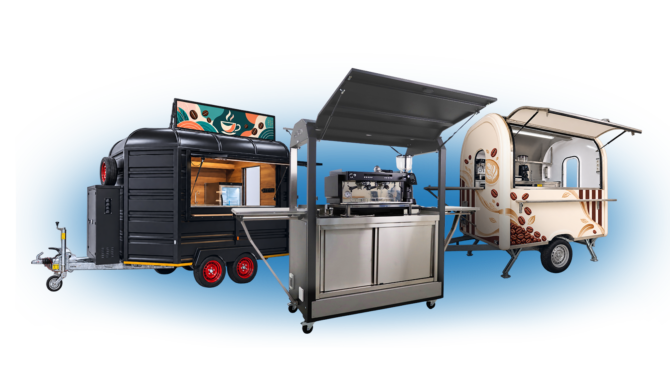
Coffee
Coffee is a language in itself!
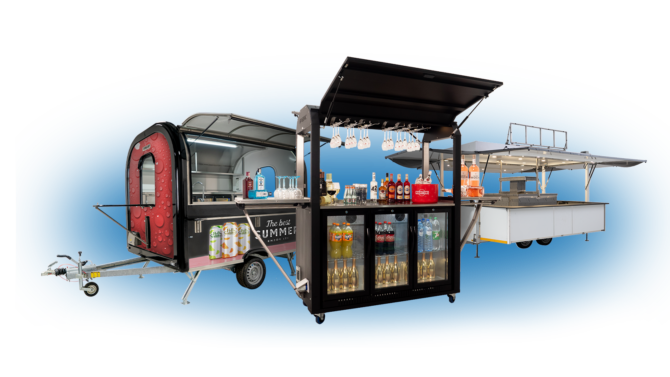
Bar
From zero to happy hour, anywhere.

Kitchen
Cook, serve, and satisfy – your kitchen on wheels!
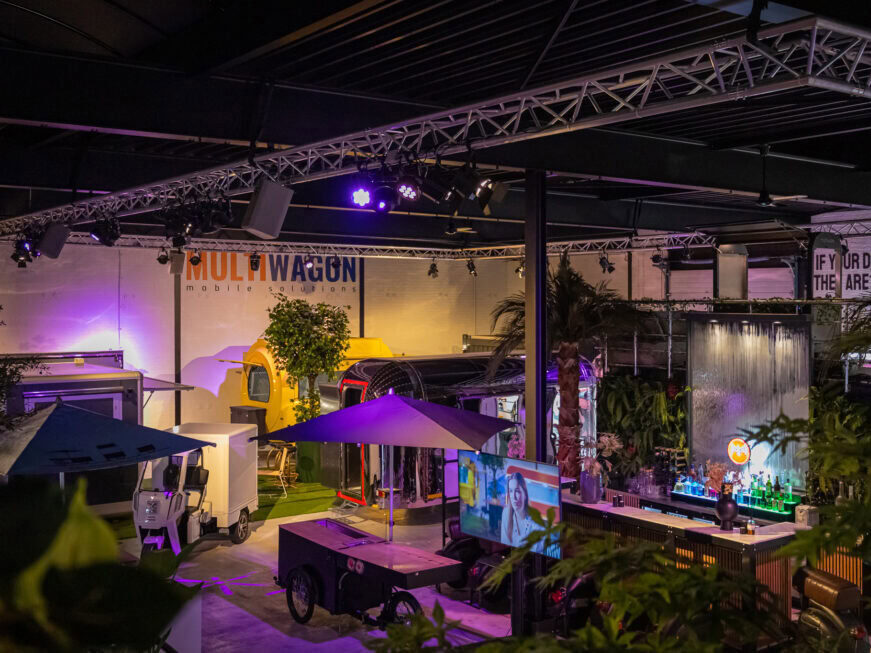
Step inside our Experience Center
Step inside our showroom and explore our trailers and concepts up close. See the different models, check out the layouts, and experience the quality and versatility firsthand. Want a guided tour or to speak with one of our experts while you explore? Book your visit and discover your perfect trailer in person!
Find your nearest Experience Center
Online consultation
Experience our trailers and concepts firsthand, without leaving your home! During a live online session, one of our experts will show you the models in real time using a smartphone or tablet. You can see inside each trailer, explore the layouts, and get a close-up look at the quality and features as if you were there in person. Get personalized advice and answers to all your questions — all from the comfort of your own home!
Request an online consultation