




Required permits for your food truck in Spain
In Spain, there are various permits and regulatory requirements you need to be aware of. Don’t worry, we’ll help you get an overview of the most important requirements. Please note that rules and requirements may change within time – we are not responsible for any queries or mistakes amongst our research.
Permits & regulations at a glance
Unfortunately, you can’t just “get started” right after purchasing a food truck. In Spain, there are various permits and regulatory requirements you need to comply with. Don’t worry—we’ll help you get an overview of the most important requirements. Please note that rules and requirements may change within time – we are not responsible for any queries or mistakes amongst our research.
1. Tax registration and legal structure
To operate a food truck in Spain, the first step is to register the business with the tax authorities. This is typically done using the Modelo 036, which officially declares the start of the economic activity. Without this step, it is not legally possible to issue invoices or run the business. At this stage, it is also necessary to decide whether to operate as a self-employed individual or through a company.

2. Registration with Social Security
In addition to tax registration, the operator must register with the Spanish Social Security system as a self-employed worker before starting the activity. If employees are hired, additional employer obligations will apply. This process is separate from the tax registration and is mandatory. Without it, the business is not fully compliant with Spanish regulations.

3. Municipal authorization to operate
Spain does not have a single nationwide license for food trucks; the key authorization is usually issued at the municipal level. Street trading or mobile vending is regulated by local authorities, meaning each city or town decides where and under what conditions food trucks can operate. A food truck cannot legally operate in public spaces without specific authorization. In most cases, permits are tied to a particular location, time period, or event.
4. Health registration or notification
A food truck is considered a food business and must comply with food safety regulations. In most cases, when selling directly to end consumers, the registration or notification is handled at the regional (autonomous community) level rather than through a single national license. This means the operator must check the specific requirements of the region where the business is based. Completing this step is essential to legally prepare and sell food.

Food hygiene training
There is no longer a standardized official “food handler license” in Spain in the old format. Instead, it is mandatory that all staff handling food receive appropriate hygiene training relevant to their specific tasks. The business must be able to demonstrate that this training is sufficient and properly documented. This also applies to the person responsible for food safety within the business.
6. Hygiene system and self-control measures
A food truck must implement a basic food safety and hygiene system based on good practices. This includes, depending on the activity, cleaning and disinfection procedures, temperature control, traceability, allergen management, and safe food handling. This is not just a recommendation but a regulatory requirement. For small businesses, simplified systems are allowed, but they must still be appropriate to the level of risk.

7. Vehicle compliance and event permits
If the food truck has been modified or equipped for food preparation and service, the vehicle must comply with Spanish technical regulations for vehicle modifications. This ensures that installations such as gas, electricity, and kitchen equipment are legally approved. In addition, when operating at festivals, markets, or temporary events, extra permits from organizers or local authorities are often required. Being properly registered as a business does not automatically grant permission to operate at any event.

7. 8. Alcohol sales in food trucks
The sale of alcoholic beverages in food trucks in Spain is not automatically permitted and largely depends on local regulations. In practice, each municipality can decide whether alcohol sales are allowed and under which conditions. In many cities, alcohol is only permitted at specific events, festivals, or designated areas, while it may be prohibited in public streets. Additional restrictions may apply, such as limited opening hours, allowed types of alcohol, or extra permits. It is therefore essential to always check the local rules of the city where the food truck will operate.
Discover our ready-made concepts

Coffee
Coffee is a language in itself!

Bar
From zero to happy hour, anywhere.

Pizza
Mamma mia! Your very own pizza truck awaits!
Something for every need
Discover our models

Eco Trailers
Our Eco line is available as a food trailer, coffee cart, or mobile sales and promotional vehicle. Depending on the weight, our all-rounders can be towed with a B or B+E driving license. Hitched to your car, they’re ready to...

Premium Trailer
Our Premium Trailers look just as attractive as the Eco Trailers, but they offer more space and possibilities. Available in three different versions. That way, we are sure there is always a Premium Trailer that meets your wishes and needs!

Elite Trailer
Our Elite Trailers are the most luxurious trailers in our range. They offer the most space and possibilities, and also feature a fresh and modern design. Choose an Elite Trailers for the highest level of luxury and class in mobile...
Step inside our Experience Center
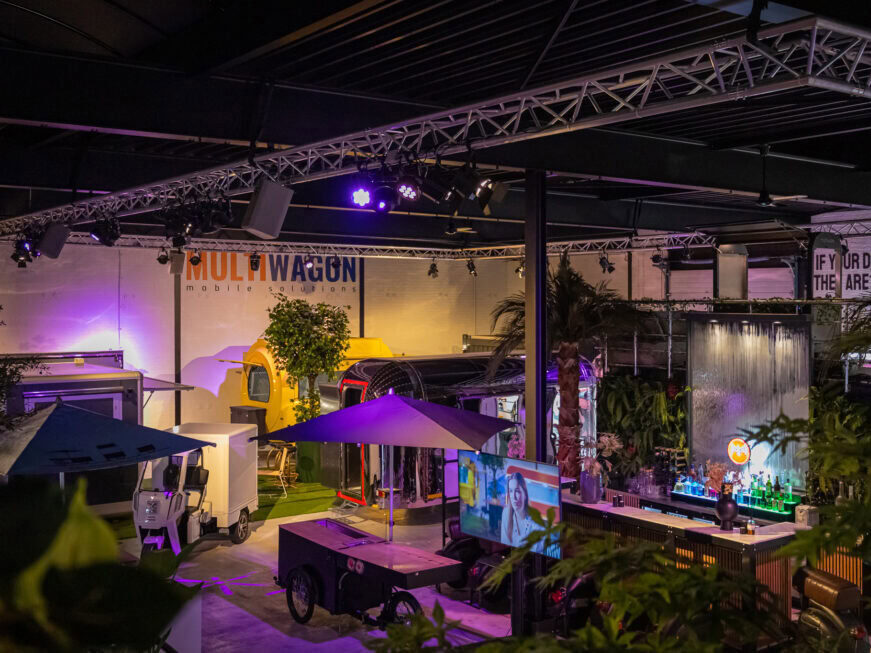
Step inside our showroom and explore our trailers and concepts up close. See the different models, check out the layouts, and experience the quality and versatility firsthand. Want a guided tour or to speak with one of our experts while you explore? Book your visit and discover your perfect trailer in person!
Find your nearest Experience Center
Online consultation
Experience our trailers and concepts firsthand, without leaving your home! During a live online session, one of our experts will show you the models in real time using a smartphone or tablet. You can see inside each trailer, explore the layouts, and get a close-up look at the quality and features as if you were there in person. Get personalized advice and answers to all your questions — all from the comfort of your own home!
Request an online consultation