




The real cost of starting a food truck
Buying a food truck is a dream for many aspiring entrepreneurs, and the popularity of mobile food concepts continues to grow worldwide. But what does a food truck actually cost? In this article, we break it all down for you, from the purchase price and equipment to permits, location fees, and many other important expenses you should consider.
Thinking about starting your own food business on wheels?
In this article, we guide you through each section of the cost breakdown, covering everything listed in the table of contents.
1. Purchase costs
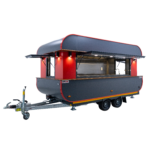
How much does a food truck cost? The purchase price of a food trailer can vary significantly and depends largely on your concept and requirements. It’s important to carefully define your needs in advance: What food or drinks will you be selling? Which equipment is required, and how much space will you need?Because every concept is different, there is no single fixed price for a food truck. At Multiwagon, however, you can purchase a food trailer starting from €10,995.

2. Equipment costs
Just like the purchase price, food truck equipment costs can vary widely depending on your concept. A fries stand requires very different equipment than, for example, an ice cream truck. You can choose to buy a food truck with equipment included, or start with an empty unit and add the equipment yourself.
In addition to major appliances, you’ll also need kitchen tools and other practical items. As a result, total equipment costs are flexible and depend on your specific setup. Reach out to our experts to get an exact price for your personal design.
![Img 2636 1[1]](https://www.multiwagon.com/wp-content/uploads/2024/06/IMG_2636-11-980x653.jpg)
3. Permit costs
Permit costs for operating a food truck can vary significantly depending on the country, city, and specific location. As a general rule of thumb, total permit and licensing fees often fall in the range of €500–€1,000 per year, covering items such as trading permits, use-of-space permissions, and basic administrative registrations. However, the exact permits required and their costs are determined at the local municipal level. Food truck operators should therefore always check with their local municipality or city authority to confirm which permits are needed and the precise fees that apply in their area.

4. Location costs
When you want to be at a (foodtruck) festival, you usually have to pay for it. The price is agreed upon with the event organizer. At some events, you pay a fixed amount (for example, €200 per day). At other events, you give a part of your revenue to the organization. This percentage is usually between 15% and 50%. There are even festivals where you pay in both ways. So it is important to carefully check in advance which festivals you want to attend and what you have to pay for them.
Read more about how to find the right location in our blog article:
How to find the right location
5. Fuel costs
Fuel costs depend largely on the size of food trailer you operate and how often you move it. If your food trailer stays in one location, fuel expenses will be minimal. However, if you regularly travel between festivals, events, or different selling locations, fuel costs will naturally be higher. Multiwagon offers a wide range of food trailers that can be easily towed by your car, meaning you only incur the fuel costs of your vehicle.

6. Food purchase costs
The products you sell must, of course, be purchased in advance, making it important to carefully estimate what and how much you expect to sell. Products such as coffee beans or bottled drinks have a long shelf life and are easy to store, which makes planning easier. Perishable items like fresh meat or dairy products, however, require more precise forecasting and proper storage.
Making a realistic sales estimate helps you avoid shortages while also preventing unnecessary waste. Overordering can lead to spoiled products and higher costs, whereas good planning ensures efficiency and sustainability. Minimizing food waste is not only better for your budget, but also more responsible from an environmental perspective.

7. Maintenance costs
In addition to the initial investment, it is important to account for the ongoing maintenance and operating costs of a food trailer. Regular expenses such as cleaning, inspections, minor repairs, replacement of parts, and technical servicing should always be included in your budget. As a general rule of thumb, it is advisable to set aside approximately €500 to €1,500 per year for maintenance, depending on how intensively the trailer is used and how much equipment it contains.
By reserving a fixed maintenance budget, you can avoid unexpected costs and ensure that your food trailer remains safe, reliable, and fully operational. For a more detailed explanation of proper food trailer maintenance and a breakdown of typical upkeep costs, you can read more in our dedicated blog article on how to maintain a food trailer.
How to maintain my Multiwagon
Robust quality at attractive prices
Discover our models

Eco Trailers
Our Eco line is available as a food trailer, coffee cart, or mobile sales and promotional vehicle. Depending on the weight, our all-rounders can be towed with a B or B+E driving license. Hitched to your car, they’re ready to...

Premium Trailer
Our Premium Trailers look just as attractive as the Eco Trailers, but they offer more space and possibilities. Available in three different versions. That way, we are sure there is always a Premium Trailer that meets your wishes and needs!

Streamline Trailer
The iconic trailer, enhanced with all the amenities you need to present and sell your product in the best possible way. Designed for convenience, functionality, and visual impact, it is fully equipped to support your business wherever you go. Simply...
8. Insurance costs
A food truck can be exposed to various risks, such as fire, theft, storm damage, or accidents. To avoid unexpected financial losses, it is important to take out appropriate insurance for your food truck. There are specialized food truck insurance policies available that cover damage to the vehicle and unforeseen incidents. In addition, many operators choose to take out contents insurance, general liability insurance, and business interruption or compensation insurance.
As a general indication, food truck insurance costs typically range between €600 and €1,500 per year, depending on the type of vehicle, coverage level, and country. While these insurances involve ongoing costs, they provide essential protection and can significantly reduce financial risk if something goes wrong.

9. Staff costs
If you decide to start on a larger scale and hire staff, personnel costs will become an important part of your overall expenses. These costs include wages, social contributions, and the necessary insurance for your employees. While employing staff naturally increases your operating costs, it also allows you to work more efficiently and serve more customers at the same time.
With additional helping hands, you can handle higher peak demand, reduce waiting times, and potentially operate longer opening hours or multiple service points. As a result, staff expenses are not just costs, but an investment that can help increase your sales capacity and overall revenue.

Explore our ready-made concepts

Coffee
Coffee is a language in itself!

Kitchen
Cook, serve, and satisfy – your kitchen on wheels!

Bar
From zero to happy hour, anywhere.
10. Other costs
In addition to the major expenses, there are also various smaller and often unexpected food truck costs that should not be overlooked. These include items such as cleaning products to keep your food truck hygienic, replacement supplies, and tools for daily maintenance. You may also need equipment like a mobile payment terminal, cash drawer, or small kitchen accessories.
As a general guideline, it is wise to budget around €300 to €800 per year for these miscellaneous and unforeseen expenses. Some of these costs are ongoing, such as cleaning supplies and consumables, while others are one-time investments, such as purchasing a mobile payment terminal or additional equipment. Planning ahead for these smaller expenses helps prevent surprises and keeps your operation running smoothly.

Maximize your revenue
Your revenue can come from several different sources, depending on how and where you operate. For example, you may choose to participate in food truck festivals or events, where you either earn revenue based on your sales or receive a fixed fee from the event organizer. Another option is direct sales to consumers, such as operating from a designated spot in a city or at a market (please note that a permit is usually required for this).
In addition, food trucks are often hired for private or corporate events, such as company parties, weddings, or product launches. In these cases, you typically agree on a fixed price in advance or calculate the total cost and revenue afterward based on consumption.
It is not possible to define an average income for a food truck, as revenue depends heavily on factors such as your product offering, pricing, location, operating hours, and target audience. What is essential, however, is that your total income consistently exceeds your operating costs. Careful planning, cost control, and choosing the right sales channels are key to building a profitable and sustainable food truck business.
The inspiring success story of the Sour Truck
Advantages of buying a food truck
- Lower startup costs:
Compared to opening a traditional restaurant, starting a food trailer requires a much lower initial investment, making it an accessible option for many entrepreneurs. - Clear focus and expertise:
Food trucks usually specialize in one type of dish or concept. This focus helps build expertise and keeps purchasing and inventory costs lower. - Freedom and flexibility:
A food trailer offers high mobility, allowing you to choose where and when you operate, which events you attend, and what you sell. - Built-in publicity:
Your food truck acts as a moving advertisement. By operating in different locations and events, people across the country can discover your brand without high marketing costs.

Buying or financing a food truck?
You can either buy or finance a food truck, and both options have their advantages. Buying a food truck is usually more cost-effective in the long term and means you own the vehicle outright without ongoing obligations, while financing allows you to start without paying the full purchase price upfront and helps preserve your cash flow. The right choice depends on your budget, business goals, and how quickly you want to scale.

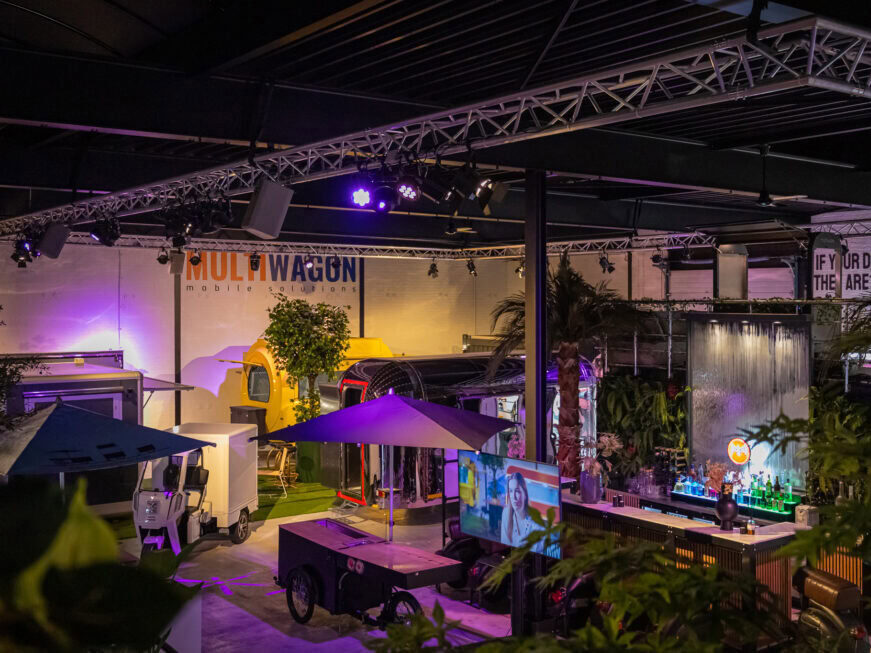
Step inside our Experience Center
Step inside our showroom and explore our trailers and concepts up close. See the different models, check out the layouts, and experience the quality and versatility firsthand. Want a guided tour or to speak with one of our experts while you explore? Book your visit and discover your perfect trailer in person!
Find your nearest Experience Center
Online consultation
Experience our trailers and concepts firsthand, without leaving your home! During a live online session, one of our experts will show you the models in real time using a smartphone or tablet. You can see inside each trailer, explore the layouts, and get a close-up look at the quality and features as if you were there in person. Get personalized advice and answers to all your questions — all from the comfort of your own home!
Request an online consultation